
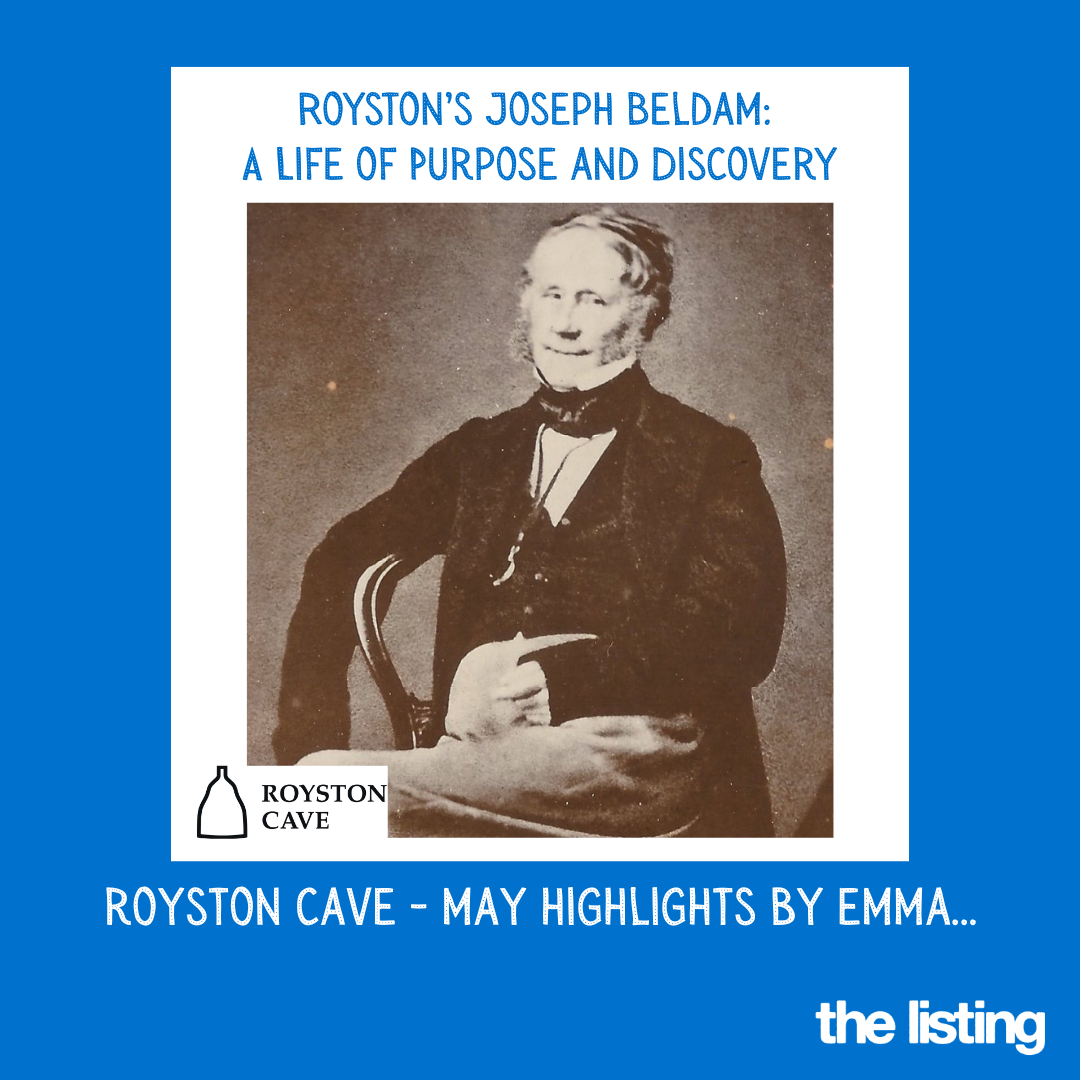
Joseph Beldam was born in 1795 and lived most of his life in Royston.
In 1827, Beldam joined the Anti-Slavery Society in London and for many years devoted his time and attention to obtaining freedom for slaves throughout the British Empire.
The Slave Emancipation Act was passed in 1833, but the Act was violated and open to exploitation. Beldam was at the centre of the legal battle to address this and was tasked with collecting and analysing evidence from all sides.
From that time until the final abolition of slavery, Beldam dedicated his life to the subject, also joining The Society for the Extinction of the Slave Trade.
In 1852, after retirement, Beldam made a careful examination of Royston Cave, assisted by his friend, Edward Nunn, who was the curator of Royston Museum at the time. His report was initially presented to the Royal Society of Antiquaries and was later published in his book The Origin and Use of The Royston Cave, for which Beldam is now most famously remembered.
Beldam concluded that Royston Cave was a Roman construction, built towards the beginning of Christianity, and, at a later period, was used as a Roman tomb. He suggested that most of the carvings and decorations were made later, perhaps around the time of the Crusades, and that it was then converted into a private chapel to which a hermitage was probably attached.
Joseph Beldam died at The Banyers House on Melbourn Street, now beautifully refurbished as The Chalk Hare, on 6th June 1866, at the age of 71. He is buried in his family vault at Royston Parish Church.
Emma, Royston Cave Manager
For more information: info@roystoncave.co.uk | FB @roystoncave | Insta @royston_cave | www.roystoncave.co.uk
Public tours re-start on 4th April until September 2026, every weekend afternoon.
Private tours and group bookings are available year round.
To book a tour, visit: www.roystoncave.co.uk
Royston Cave, Melbourn Street, Royston SG8 7BZ